
Blog Smith is inspired by the myth of Hephaestus in the creation of blacksmith-like, forged materials: ideas. This blog analyzes topics that interest me: IT, politics, technology, history, education, music, and the history of religions.
Sunday, May 31, 2020
Saturday, May 30, 2020
Friday, May 29, 2020
Thursday, May 28, 2020
Wednesday, May 27, 2020
Tuesday, May 26, 2020
Ian Hunter, Mott The Hoople, Nicky Horne

 Mott The Hoople/Nicky Horne/Capital Radio London
https://audioboom.com/posts/5071441-con ... -horne?t=0
Interesting interview with Nicky Horne about his career
and early days at Capital Radio special mention from 27:00.
Interesting interview with Nicky Horne about his career
and early days at Capital Radio special mention from 27:00.
Monday, May 25, 2020
Ian Hunter Tribute: Jim Kerr, Simple Minds
Simple Minds Official
BOOKS - OF BRILLIANT THINGS : IAN HUNTER'S DIARY OF A ROCK N ROLL STAR
As with their music, I have over the years enjoyed many autobiographies from artists/ producers/music business legends etc. Those authentic voices relaying tales and details of how they made the music, as well of course as to how they came to make career's out of music, has tremendous appeal. Especially in getting to know the hardships endured on the road to producing successful music.
But it really has to be the autobiography if it is to get my attention. Biographies alternately, and no matter how well researched, always lack the voice of the main character, the true voice that resonates at the core of all great stories. I do have some exceptions to that rule in the case of Frank Sinatra, whose story accompanied me most nights on tediously long drives during our recent tour.
To be fair, and due to the fact that I try to get out walking for up to a couple of hours most days, (when not touring) it is mostly audiobooks that I listen to when doing so. Casting an eye right now over the purchases that I've made over the recent years I observe the following names. Patti Smith, David Byrne, Bob Dylan Neil Young, Brian Eno, Keith Richards, Bruce Springsteen, Viv Albertine, Tracy Thorn, and Pete Townsend. Oh and least I forget...someone gave me Chrissie Hynde's book for Christmas a couple of years ago.
I have yet to get round to Springsteen and Richards, even though I feel have already. The media promotion for both was unavoidable, and when ever things become real huge events, I find that I prefer to wait a few years and then catch up when the hype has died down, as usually I'm already bored with it on arrival.
Others that I recollect from the past are John Lydon's 'No Irish, No Black's, No Dogs.'
And Ronnie Spector's ' Be My Baby : How I Survived Mascara, Miniskirts and Madness. Both possibly worth it for those engaging titles alone -
I also survived an amount of mascara and madness. As for miniskirts? Well, still working on that.
Going way into the distant past, there is a huge place in my heart still for the first ever music autobiography that I read. It was produced in the shape of a tour diary and written by Mott The Hoople's lead singer, Ian Hunter. As much as any record, those pages more than merely influenced me in wanting to somehow get involved with music. Even if, Hunter is clearly warning the reader against that very notion.
As Wiki puts it.
"Diary of a Rock'n'Roll Star is Ian Hunter's famous written-as-it-happened account of Mott the Hoople's 5 week November-December 1972 U.S. tour. It chronicles the endless traveling, hotels, sound checks, performances and, notably, strips away the glittering facade of the rock star.
As if aware of his own future career arc, Hunter warns, "It may look flashy, but it's over and you are finished before you know it - if you aren't already broken by one thing it will be another... The rock business is a dirty business full stop."
I dearly loved Mott The Hoople in those days, and I still listen to their albums, full of songs that both hit you in the heart, and are full of swagger and full on fantasy.
Although it was Bowie who wrote their huge hit, the still wonderful "All The Young Dudes " Ian Hunter nonetheless is and always was a great songwriter. One with with a voice that I loved, the entire band a noise that was way more sublime than most other around at that time.
Another reason for me to love Ian - not that any more is needed?
Well, although born in Shropshire in 1939, due to the onset of war, Hunter's mother and siblings moved to live with the family of his Scottish father in Hamilton, South Lanarkshire. Hunter was brought up there until the age of six and considers himself a Scot.
Coincidentally my father's family also came from Hamilton. It is not that big a place really. And as I passed by it on the train recently, how could I not consider the brilliant Ian Hunter, who is still writing, recording and touring...and is very much "one of ours."
Sunday, May 24, 2020
Saturday, May 23, 2020
Friday, May 22, 2020
Thursday, May 21, 2020
Wednesday, May 20, 2020
Rod's Pods, glisser
Posted: 16 Aug 2017 10:29 AM PDT
- Interview with Michael Piddock, CEO and Founder of Glisser. Glisser is a unique audience response system that shares presentation slides to mobile devices in real-time and uses polling and Q&A to make live events and the classroom interactive. We discuss:

Michael Piddock, CEO & Founder - How Glisser got started
- How you use Glisser audience response
- Limits of the free version
- Key features of Glisser
- Live Polling
- Live Slide Sharing
- Audience Q&A backchannel
- Twitter Wall for events
- Web platform, no plugin required
- Participant note taking
- Downloading slides
- Translated captions (coming soon)
- Podsafe Music Selection
Tuesday, May 19, 2020
Monday, May 18, 2020
Philosophy Part 1
Table of Contents
Part 1: Introduction
What Is Philosophy?
Monroe C. Beardsley and Elizabeth Lane Beardsley
Monroe C. Beardsley and Elizabeth Lane Beardsley
The Value of Philosophy
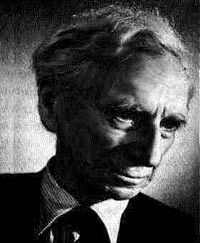
Bertrand Russell
Biography
Bertrand Arthur William Russell, 3rd Earl Russell, 18 May 1872 – 2 February 1970) was a British philosopher, logician, mathematician, historian, writer, social critic, political activist and Nobel laureate. At various points in his life he considered himself a liberal, a socialist, and a pacifist, but he also admitted that he had "never been any of these things, in any profound sense". He was born in Monmouthshire into one of the most prominent aristocratic families in the United Kingdom.
In the early 20th century, Russell led the British "revolt against idealism". He is considered one of the founders of analytic philosophy along with his predecessor Gottlob Frege, colleague G. E. Moore, and protégé Ludwig Wittgenstein. He is widely held to be one of the 20th century's premier logicians. With A. N. Whitehead he wrote Principia Mathematica, an attempt to create a logical basis for mathematics. His philosophical essay "On Denoting" has been considered a "paradigm of philosophy". His work has had a considerable influence on mathematics, logic, set theory, linguistics, artificial intelligence, cognitive science, computer science (see type theory and type system), and philosophy, especially the philosophy of language, epistemology, and metaphysics.
Russell was a prominent anti-war activist; he championed anti-imperialism. Occasionally, he advocated preventive nuclear war, before the opportunity provided by the atomic monopoly had passed, and "welcomed with enthusiasm" world government. He went to prison for his pacifism during World War I. Later, he concluded war against Adolf Hitler was a necessary "lesser of two evils". He criticized Stalinist totalitarianism, attacked the involvement of the United States in the Vietnam War, and was an outspoken proponent of nuclear disarmament. In 1950 Russell was awarded the Nobel Prize in Literature "in recognition of his varied and significant writings in which he champions humanitarian ideals and freedom of thought".
Russell's paradox represents either of two interrelated logical antinomies. The most commonly discussed form is a contradiction arising in the logic of sets or classes. Some classes (or sets) seem to be members of themselves, while some do not. The class of all classes is itself a class, and so it seems to be in itself. The null or empty class, however, must not be a member of itself. However, suppose that we can form a class of all classes (or sets) that, like the null class, are not included in themselves. The paradox arises from asking the question of whether this class is in itself. It is if and only if it is not. The other form is a contradiction involving properties. Some properties seem to apply to themselves, while others do not. The property of being a property is itself a property, while the property of being a cat is not itself a cat. Consider the property that something has just in case it is a property (like that of being a cat) that does not apply to itself. Does this property apply to itself? Once again, from either assumption, the opposite follows. The paradox was named after Bertrand Russell (1872-1970), who discovered it in 1901.
Mathematics - Russell's Paradox, 3:02
In the foundations of mathematics, Russell's paradox (also known as Russell's antinomy), discovered by Bertrand Russell in 1901, showed that some attempted formalizations of the naive set theory created by Georg Cantor led to a contradiction. The same paradox had been discovered a year before by Ernst Zermelo but he did not publish the idea, which remained known only to David Hilbert, Edmund Husserl, and other members of the University of Göttingen.
According to naive set theory, any definable collection is a set. Let R be the set of all sets that are not members of themselves. If R is not a member of itself, then its definition dictates that it must contain itself, and if it contains itself, then it contradicts its own definition as the set of all sets that are not members of themselves. This contradiction is Russell's paradox. Symbolically:
https://youtu.be/GpVRePLMLbU
Bertrand Russell
Biography
Bertrand Arthur William Russell, 3rd Earl Russell, 18 May 1872 – 2 February 1970) was a British philosopher, logician, mathematician, historian, writer, social critic, political activist and Nobel laureate. At various points in his life he considered himself a liberal, a socialist, and a pacifist, but he also admitted that he had "never been any of these things, in any profound sense". He was born in Monmouthshire into one of the most prominent aristocratic families in the United Kingdom.
In the early 20th century, Russell led the British "revolt against idealism". He is considered one of the founders of analytic philosophy along with his predecessor Gottlob Frege, colleague G. E. Moore, and protégé Ludwig Wittgenstein. He is widely held to be one of the 20th century's premier logicians. With A. N. Whitehead he wrote Principia Mathematica, an attempt to create a logical basis for mathematics. His philosophical essay "On Denoting" has been considered a "paradigm of philosophy". His work has had a considerable influence on mathematics, logic, set theory, linguistics, artificial intelligence, cognitive science, computer science (see type theory and type system), and philosophy, especially the philosophy of language, epistemology, and metaphysics.
Russell was a prominent anti-war activist; he championed anti-imperialism. Occasionally, he advocated preventive nuclear war, before the opportunity provided by the atomic monopoly had passed, and "welcomed with enthusiasm" world government. He went to prison for his pacifism during World War I. Later, he concluded war against Adolf Hitler was a necessary "lesser of two evils". He criticized Stalinist totalitarianism, attacked the involvement of the United States in the Vietnam War, and was an outspoken proponent of nuclear disarmament. In 1950 Russell was awarded the Nobel Prize in Literature "in recognition of his varied and significant writings in which he champions humanitarian ideals and freedom of thought".
Russell's Paradox
Russell's paradox represents either of two interrelated logical antinomies. The most commonly discussed form is a contradiction arising in the logic of sets or classes. Some classes (or sets) seem to be members of themselves, while some do not. The class of all classes is itself a class, and so it seems to be in itself. The null or empty class, however, must not be a member of itself. However, suppose that we can form a class of all classes (or sets) that, like the null class, are not included in themselves. The paradox arises from asking the question of whether this class is in itself. It is if and only if it is not. The other form is a contradiction involving properties. Some properties seem to apply to themselves, while others do not. The property of being a property is itself a property, while the property of being a cat is not itself a cat. Consider the property that something has just in case it is a property (like that of being a cat) that does not apply to itself. Does this property apply to itself? Once again, from either assumption, the opposite follows. The paradox was named after Bertrand Russell (1872-1970), who discovered it in 1901.
Mathematics - Russell's Paradox, 3:02
In the foundations of mathematics, Russell's paradox (also known as Russell's antinomy), discovered by Bertrand Russell in 1901, showed that some attempted formalizations of the naive set theory created by Georg Cantor led to a contradiction. The same paradox had been discovered a year before by Ernst Zermelo but he did not publish the idea, which remained known only to David Hilbert, Edmund Husserl, and other members of the University of Göttingen.
According to naive set theory, any definable collection is a set. Let R be the set of all sets that are not members of themselves. If R is not a member of itself, then its definition dictates that it must contain itself, and if it contains itself, then it contradicts its own definition as the set of all sets that are not members of themselves. This contradiction is Russell's paradox. Symbolically:

https://youtu.be/GpVRePLMLbU
Defence of Socrates
The Apology of Socrates (Greek: Ἀπολογία Σωκράτους, Apologia Sokratous, Latin: Apologia Socratis), by Plato, is the Socratic dialogue that presents the speech of legal self-defence, which Socrates presented at his trial for impiety and corruption, in 399 BC.
Specifically, the Apology of Socrates is a defence against the charges of “corrupting the young” and “not believing in the gods in whom the city believes, but in other daimonia that are novel” to Athens (24b).
Among the primary sources about the trial and death of the philosopher Socrates (469–399 BC), the Apology of Socrates is the dialogue that depicts the trial, and is one of four Socratic dialogues, along with Euthyphro, Phaedo, and Crito, through which Plato details the final days of the philosopher Socrates.
Socrates' Apology in 2 minutes, 2:07
https://youtu.be/okZHInakSYo
Plato
https://youtu.be/i5JVqp-qlic
Sunday, May 17, 2020
Saturday, May 16, 2020
Friday, May 15, 2020
Thursday, May 14, 2020
Wednesday, May 13, 2020
Tuesday, May 12, 2020
Monday, May 11, 2020
Sunday, May 10, 2020
Saturday, May 9, 2020
Friday, May 8, 2020
Thursday, May 7, 2020
Traitor Clapper & Trump Hater
A line from the interview with former CIA Director James Clapper has drawn attention.
"I never saw any direct empirical evidence that the Trump campaign or someone in it was plotting/conspiring with the Russians to meddle with the election," he said.How to Properly Store an Old Car
/Store-Your-Classic-Car
Use baking soda to cut down on moisture and mildew.
.hagerty.com/articles-videos/articles/2011/11/01/step-by-step-guide-to-winterizing-your-car
Use baking soda to cut down on moisture and mildew.
.hagerty.com/articles-videos/articles/2011/11/01/step-by-step-guide-to-winterizing-your-car
/automotive/car-maintenance/car-care-how-to-store-your-classic-car-or-sports-car/view-all
Stop at an auto parts store and buy a fresh bottle of fuel stabilizer. Then fill the tank at the gas station and pour in the recommended amount of fuel stabilizer. Drive the car around for about 15 minutes to get the stabilizer mixed into the gas and spread throughout the fuel system.
There’s no way your battery will stay charged over the winter. And once it loses its charge, it can freeze. Then it’s toast. Either remove it and store it indoors, or keep it at full charge by hooking it up to a battery maintainer (shown is the SOLAR No. PL2110 Pro-Logix available through our affiliation with amazon.com).
Stop at an auto parts store and buy a fresh bottle of fuel stabilizer. Then fill the tank at the gas station and pour in the recommended amount of fuel stabilizer. Drive the car around for about 15 minutes to get the stabilizer mixed into the gas and spread throughout the fuel system.
There’s no way your battery will stay charged over the winter. And once it loses its charge, it can freeze. Then it’s toast. Either remove it and store it indoors, or keep it at full charge by hooking it up to a battery maintainer (shown is the SOLAR No. PL2110 Pro-Logix available through our affiliation with amazon.com).
Wednesday, May 6, 2020
Tuesday, May 5, 2020
Monday, May 4, 2020
Sunday, May 3, 2020
Saturday, May 2, 2020
Trumps Outfoxes China: China Sends Bioweapon
Article 7.6 states: “In the event that a natural disaster or other unforeseeable event outside the control of the Parties delays a Party from timely complying with its obligations under this Agreement, the Parties shall consult with each other.”