Today we discuss Martin Heidegger and his views on Modern Technology.

Blog Smith is inspired by the myth of Hephaestus in the creation of blacksmith-like, forged materials: ideas. This blog analyzes topics that interest me: IT, politics, technology, history, education, music, and the history of religions.
Tuesday, December 31, 2019
Monday, December 30, 2019
Sunday, December 29, 2019
Saturday, December 28, 2019
Friday, December 27, 2019
Thursday, December 26, 2019
Wednesday, December 25, 2019
Tuesday, December 24, 2019
Monday, December 23, 2019
Sunday, December 22, 2019
Saturday, December 21, 2019
Friday, December 20, 2019
Thursday, December 19, 2019
Wednesday, December 18, 2019
Tuesday, December 17, 2019
Philosophize This! Episode #100, Part 1 Heidegger and Dasein
Podcast
Today we begin our discussion of the philosophy of Martin Heidegger by looking at his roots in Phenomenology and his revolutionary concept of Dasein (being there).
/podcast/philosophize-this
Today we begin our discussion of the philosophy of Martin Heidegger by looking at his roots in Phenomenology and his revolutionary concept of Dasein (being there).
/podcast/philosophize-this
Monday, December 16, 2019
Sunday, December 15, 2019
Saturday, December 14, 2019
Friday, December 13, 2019
Thursday, December 12, 2019
Wednesday, December 11, 2019
Easter Facts
You may not know this, but the vast majority of experts (including secular ones) on the life of Jesus overwhelmingly agree on four facts of history:
- Jesus died on a Roman cross and was buried in a tomb.
- The tomb was empty three days later.
- Various individuals (and sometimes whole groups of people) experienced what they took to be the resurrected Jesus.
- A skeptical non-believer—James, the brother of Jesus—and a vicious persecutor of Christians—Saul of Tarsus—did an immediate about-face based on what they claimed was an encounter with the risen Christ, and both suffered martyrdom rather than recant.
What historians don’t agree on is what best explains these four facts pertaining to Jesus.
But there aren’t many options.
Jesus was dead. He suffered a brutal execution, was pronounced dead by a battle-seasoned Roman centurion, and laid in a cold crypt.
Three days later, the tomb was empty, a fact even Jesus’ enemies did not dispute.
And what of the sightings? One theory is that the disciples were hallucinating. Really? How do multiple individuals and whole groups of people hallucinate the same thing at the same time many times over at multiple locations? That doesn’t happen.
And what of James and Paul? They had absolutely no native interest in conjuring a resurrection story, nor was there any evidence they were in a mental state that motived them to see what wasn’t really there.
So, what explanation accounts for all four facts?
Only one answer will do. In Peter’s words, “This Jesus, God raised up again, to which we are all witnesses” (Acts 2:32).
Tuesday, December 10, 2019
Monday, December 9, 2019
Sunday, December 8, 2019
Saturday, December 7, 2019
Friday, December 6, 2019
Thursday, December 5, 2019
Wednesday, December 4, 2019
Tuesday, December 3, 2019
Monday, December 2, 2019
Sunday, December 1, 2019
Saturday, November 30, 2019
Friday, November 29, 2019
Thursday, November 28, 2019
Wednesday, November 27, 2019
Tuesday, November 26, 2019
Monday, November 25, 2019
Sunday, November 24, 2019
Saturday, November 23, 2019
Friday, November 22, 2019
Wednesday, November 20, 2019
Tuesday, November 19, 2019
Monday, November 18, 2019
Sunday, November 17, 2019
Saturday, November 16, 2019
Friday, November 15, 2019
Thursday, November 14, 2019
Wednesday, November 13, 2019
Chapter 4: Aegean World and the Rise of Greece
The Ancient Greeks
This is a survey of ancient Greek history from the Bronze Age to the death of Socrates in 399 BCE. Along with studying the most important events and personalities, we will consider broader issues such as political and cultural values and methods of historical interpretation.
We will start our first module with an overview of the physical and geographical setting for our class – “the Greek world.” Then we will move rapidly across many centuries, beginning with two Bronze Age civilizations: Minoan on the island of Crete, and Mycenaean on the mainland. Our evidence for both of these is almost purely archaeological, and so you can consider the ways scholars have interpreted material remains to build a picture of how the societies were structured. After the collapse of Mycenaean civilization, there followed the so-called Dark Ages. These four centuries pose for us the challenge of reconstructing what happened during a long period that has left relatively little evidence. We will conclude this module with an all too brief consideration of the two magnificent Homeric epics, the Iliad and the Odyssey, whose stories and heroes became essential elements in Greek cultural identity.
Introduction and the Minoan Civilization
Lecture 1: Geography, Climate, Agriculture, Evidence, and Interpretation, 10:49
Lecture 1: Geography, Climate, Agriculture, Evidence, and Interpretation
https://d18ky98rnyall9.cloudfront.net/EjZTdkdkEeW8dA7aNEIYLw.processed/full/360p/index.mp4?Expires=1491350400&Signature=Y-Mf2Q~PIDylWADOPEJSF4BNizvBam2YlC2i1X31ZC1H4rmEHQcjBLJ3ijYR~2F9XpL9~sOh1xUliDWf7WYJtrX0JaZWKXfj0KpFnFqGYy1u7CWObkIgHoAWBcmPU4sDu9o3U94qqtfF1eCVBmnm-M0vtfiipx9qhH-ynl8o7Hc_&Key-Pair-Id=APKAJLTNE6QMUY6HBC5A
Lecture 2: Bronze Age Crete and Minoan Civilization, 18:20
Bronze Age Crete and Minoan Civilization
https://d18ky98rnyall9.cloudfront.net/Ejv5VEdkEeW4fw4zhI0ukw.processed/full/360p/index.mp4?Expires=1491350400&Signature=gWRl5DFP7L8UkiPDE8T2hP9SJaoGEeleaGtkhpEynvYfDRTLktcrX2Z~Jy~3AxcQ-K7Af6Lohq5InaG6sN5zeOE6iZvmwKJL7ZbylpTJTtSNAkFThMQWWk0nFtEHysO9PDJ2OlYKqF8saKlUKYCAJwwJIf-2ksArXkGnbNiDuSQ_&Key-Pair-Id=APKAJLTNE6QMUY6HBC5A
There are at least four excellent, widely available modern English translations of both epics, by (in chronological order) Richmond Lattimore, Robert Fitzgerald, Robert Fagles, and Stanley Lombardo.
Available online is a fine contemporary translation by Ian Johnston –
http://records.viu.ca/~johnstoi/homer/iliad1.htm
Homer, The Iliad, 17:58
Iliad Lecture
Also available online are: a late-19th-century version by Samuel Butler –
http://www.online-literature.com/homer/odyssey/
and an early-20th-century version by A. T. Taylor –
http://www.theoi.com/Text/HomerOdyssey1.html
The Odyssey
This is a survey of ancient Greek history from the Bronze Age to the death of Socrates in 399 BCE. Along with studying the most important events and personalities, we will consider broader issues such as political and cultural values and methods of historical interpretation.
We will start our first module with an overview of the physical and geographical setting for our class – “the Greek world.” Then we will move rapidly across many centuries, beginning with two Bronze Age civilizations: Minoan on the island of Crete, and Mycenaean on the mainland. Our evidence for both of these is almost purely archaeological, and so you can consider the ways scholars have interpreted material remains to build a picture of how the societies were structured. After the collapse of Mycenaean civilization, there followed the so-called Dark Ages. These four centuries pose for us the challenge of reconstructing what happened during a long period that has left relatively little evidence. We will conclude this module with an all too brief consideration of the two magnificent Homeric epics, the Iliad and the Odyssey, whose stories and heroes became essential elements in Greek cultural identity.
Introduction and the Minoan Civilization
Lecture 1: Geography, Climate, Agriculture, Evidence, and Interpretation, 10:49
Lecture 1: Geography, Climate, Agriculture, Evidence, and Interpretation
https://d18ky98rnyall9.cloudfront.net/EjZTdkdkEeW8dA7aNEIYLw.processed/full/360p/index.mp4?Expires=1491350400&Signature=Y-Mf2Q~PIDylWADOPEJSF4BNizvBam2YlC2i1X31ZC1H4rmEHQcjBLJ3ijYR~2F9XpL9~sOh1xUliDWf7WYJtrX0JaZWKXfj0KpFnFqGYy1u7CWObkIgHoAWBcmPU4sDu9o3U94qqtfF1eCVBmnm-M0vtfiipx9qhH-ynl8o7Hc_&Key-Pair-Id=APKAJLTNE6QMUY6HBC5A
Lecture 2: Bronze Age Crete and Minoan Civilization, 18:20
Bronze Age Crete and Minoan Civilization
https://d18ky98rnyall9.cloudfront.net/Ejv5VEdkEeW4fw4zhI0ukw.processed/full/360p/index.mp4?Expires=1491350400&Signature=gWRl5DFP7L8UkiPDE8T2hP9SJaoGEeleaGtkhpEynvYfDRTLktcrX2Z~Jy~3AxcQ-K7Af6Lohq5InaG6sN5zeOE6iZvmwKJL7ZbylpTJTtSNAkFThMQWWk0nFtEHysO9PDJ2OlYKqF8saKlUKYCAJwwJIf-2ksArXkGnbNiDuSQ_&Key-Pair-Id=APKAJLTNE6QMUY6HBC5A
Reading Assignment 1
Iliad, Books 1, 2, 6, 9, 18, 24. As you read these selections, pay close attention to how the characters interact with each other.There are at least four excellent, widely available modern English translations of both epics, by (in chronological order) Richmond Lattimore, Robert Fitzgerald, Robert Fagles, and Stanley Lombardo.
Available online is a fine contemporary translation by Ian Johnston –
http://records.viu.ca/~johnstoi/homer/iliad1.htm
Iliad Lecture
Reading Assignment 2
Odyssey, Books 1, 5, 9-12, 21-24. As you read, think about how this poem is similar to, and different from, the Iliad.Also available online are: a late-19th-century version by Samuel Butler –
http://www.online-literature.com/homer/odyssey/
and an early-20th-century version by A. T. Taylor –
http://www.theoi.com/Text/HomerOdyssey1.html
The Odyssey
Tuesday, November 12, 2019
Monday, November 11, 2019
Sunday, November 10, 2019
Saturday, November 9, 2019
Friday, November 8, 2019
Thursday, November 7, 2019
Fr. Robert Spitzer, Science, Roman Catholic Thought
39% millennials leaving religion per year. Pew Foundation
1. Science innovators
Lemaître, Msgr., MIT, proposed expanding model of the universe, by Hoyle, called the Big Bang Theory.
27 scientific disciplines founded by Catholic priests
The Horizons and Limits of Science
Law of Entropy
Five Steps from Entropy to a Beginning
Not likely to be refuted
Beginning of physical space-time, implies Creator
Space-Time Geometry
BVG, the Borde-Vilenkin-Guth Proof of a beginning of all expanding cosmologies,
Anthropic Coincidences
From a beginning to Creation
Nothing cannot move physical reality, therefore, something (transcending physical reality) had to move it from nothing to something, i.e., a Creator.
Fine-Tuning of Universal Constants and Conditions
Penrose-low Big Bang: 10 raised to 10 raised to 123
About this Lecture
Abstract:
“The Catholic Church has been a true friend to the natural sciences throughout its history from Nicolaus Copernicus to Gregor Mendel to Nicolas Steno and to Monsignor Georges Lemaître who discovered the Big Bang Theory. Unfortunately, the popular media has suggested that the evidence for God is subsiding from the domain of contemporary science and philosophy. However, four recent developments in physical cosmology militate against this, pointing not only to a transcendent cause beyond physical reality itself, but also to the probable intelligence of that cause:
1. The Borde-Vilenkin-Guth Proof of a beginning of all expanding cosmologies,
2. The new evidence from entropy indicating a beginning of our universe as well as any other universe or multiverse acting as a physical system subject to the Second Law of Thermodynamics,
3. The fine-tuning required for exceedingly low entropy (necessary for life forms) at the Big Bang,
4. The fine-tuning necessary for twelve universal constants to have the precise values needed for an anthropic universe (making possible the development of life forms).
Father Spitzer will discuss these four kinds of evidence and their vast applicability not only to our universe, but other hypothetical models of physical reality (such as multiverses and universes in the higher-dimensional space of string theory). He will also examine the multiverse hypothesis as a potential alternative to an intelligent creator.”
Presenter
Father Robert Spitzer, S.J., Ph.D.
Fr. Spitzer is a Catholic Priest in the Jesuit order (Society of Jesus) and is currently the President of the Magis Center (http://www.magiscenter.com/) and the Spitzer Center. Magis Center produces documentaries, books, high school curricula, adult-education curricula, and new media materials to show the close connection between faith and reason in contemporary astrophysics, philosophy, and the historical study of the New Testament. Magis Center provides rational responses to false, but popular, secular myths.
Monday, March 27, 2017
Event: Seminary Lecture Series, Philosophy Lecture
Speaker: Fr. Robert Spitzer, S.J.
Topic: The Evidence for God from Contemporary Science – Extending the Legacy of Monsignor George Lemaître
Location: Saint Charles Borromeo Seminary, St. John Vianney Hall Auditorium
Wednesday, November 6, 2019
Three Steps to Follow Conference
Let's start changing that this week!
See Lynne's short video on Overcoming the Most Powerful Force in the Universe
There are three steps to turning new knowledge into action:
1. When you learn something, this develops new neural pathways in your thinking brain, which loves the stimulation. However, these pathways will fade if you don't reinforce them.
2. Create an image of how the new ideas will look in your life if you apply them. How would this make you feel? This activates your emotional brain, which releases peptides that help you hold on to what you've learned.
3. Practice your new learning in the real world. A positive experience increases the chances you'll do this again.
Tuesday, November 5, 2019
Lecture Five Constitution: Texas v. Johnson, Freedom of Speech
Watch Lecture Five:
“Texas v. Johnson: Freedom of Speech”
Overview:
The Founders did not think the right to freedom of speech encompassed every conceivable utterance or writing. Accordingly, the First Amendment’s Free Speech Clause is meant to protect political speech. Over time, however, the Supreme Court has placed various forms of symbolic speech—also known as expressive conduct—under the protection of the First Amendment.
Monday, November 4, 2019
Sunday, November 3, 2019
Saturday, November 2, 2019
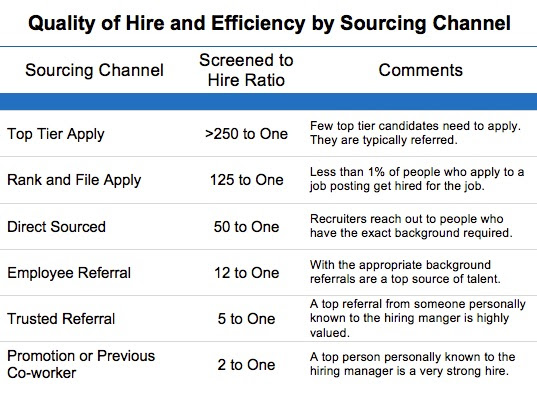
Networking Procedure
Friday, November 1, 2019
Thursday, October 31, 2019
Wednesday, October 30, 2019
Tuesday, October 29, 2019
Monday, October 28, 2019
Sunday, October 27, 2019
Orai
Pitch
Public speaking is always a little bit terrifying, but one of the best ways to get over that is to prepare as much as possible. With Orai, you can practice public speaking with a tap of a button.
Orai helps you prepare by analyzing everything you say. Whether you are practicing for a presentation or interested in improving your everyday communication, our mobile app tracks your umm's and uhh's, pace, clarity, and much more. So if you're wondering how your pace and volume changed over time, or how clearly you pronounced each individual word, Orai has you covered.
Video
Public speaking is always a little bit terrifying, but one of the best ways to get over that is to prepare as much as possible. With Orai, you can practice public speaking with a tap of a button.
Orai helps you prepare by analyzing everything you say. Whether you are practicing for a presentation or interested in improving your everyday communication, our mobile app tracks your umm's and uhh's, pace, clarity, and much more. So if you're wondering how your pace and volume changed over time, or how clearly you pronounced each individual word, Orai has you covered.
Video
Saturday, October 26, 2019
Friday, October 25, 2019
Thursday, October 24, 2019
Wednesday, October 23, 2019
Stand Out Visual Content
In this episode, I'll teach you 5 things you should know to create stand-out visual content, including:
- How to establish your focal point
- How to use patterns in your design
- How to call attention to your key message
- How to use interactivity to improve information retention
https://www.visme.co/videos/visual-design-principles
https://www.visme.co/videos/visual-design-principles
Tuesday, October 22, 2019
Monday, October 21, 2019
Sunday, October 20, 2019
Saturday, October 19, 2019
Friday, October 18, 2019
Visual Design Principles, Lecture 2
In this episode, I'll teach you 5 things you should know to create stand-out visual content, including:
- How to establish your focal point
- How to use patterns in your design
- How to call attention to your key message
- How to use interactivity to improve information retention
/visual-design-principles
Thursday, October 17, 2019
Wednesday, October 16, 2019
Roe v. Wade, Privacy and Liberty
Overview:
The Supreme Court’s 1973 decision in Roe v. Wade declared a right to an abortion as part of a right to privacy—a term not found in the Constitution. The Court’s second landmark decision on the issue, Planned Parenthood v. Casey, gave abortion rights a new grounding in an understanding of liberty that marked an explicit rejection of the Founders’ belief in an unchanging human nature. Both cases touch on fundamental questions of morality, liberty, and government power.
supreme-court/lecture-4
supreme-court/lecture-4
Tuesday, October 15, 2019
Monday, October 14, 2019
Sunday, October 13, 2019
Saturday, October 12, 2019
Friday, October 11, 2019
Thursday, October 10, 2019
Wednesday, October 9, 2019
Ancient Greeks: Quiz
Prehistory to Homer
20 questions
/ 1 points
1.
Archaeologists find pottery useful for (check all that apply):
Correct
1 / 1 points
2.
True or false: During the Bronze Age there was an identifiable, unified Greek culture.
Incorrect
0 / 1 points
3.
Which situation most accurately describes a redistributive economy?
Correct
1 / 1 points
4.
What are found in Linear-B?
Correct
1 / 1 points
5.
What are three components of the peer polity model?
Correct
1 / 1 points
6.
What was Arthur Evans’ most important accomplishment?
Correct
1 / 1 points
7.
Where did Heinrich Schliemann find nice gold jewelry for his Sophia?
Incorrect
0 / 1 points
8.
What would NOT have been associated with a Shaft Grave?
Correct
1 / 1 points
9.
What kind of burial site would have featured a large “beehive” dome?
Incorrect
0 / 1 points
10.
True or false: Both Mycenaean and Minoan civilizations fit a peer polity model?
Incorrect
0 / 1 points
11.
What are some characteristics of the Dark Ages? (check all that apply)
Correct
1 / 1 points
12.
Which of the following flourished during the Dark Ages?
Correct
1 / 1 points
13.
A major shift during the Dark Ages was from:
Correct
1 / 1 points
14.
The main concern of a Homeric hero is to acquire:
Correct
1 / 1 points
15.
Which statements accurately describe the Homeric gods? (Check all that apply)
Incorrect
0 / 1 points
16.
the Iliad ends with:
Incorrect
0 / 1 points
17.
A typical hero would have been: (check all that apply)
Incorrect
0 / 1 points
18.
The epithets that describe Achilles include:
Incorrect
0 / 1 points
19.
When Penelope’s suitors take and eat greedily in Odysseus’ home, they are violating:
Incorrect
0 / 1 points
20.
Paris and Hector are: